
Pallet Liquidation Massachusetts — Find Legit Amazon Pallet Sources
Finding a reliable source for inventory can feel like a daunting task for many local resellers. The fear of being scammed or receiving a box of trash is real and common. This guide is written to help you navigate the local market with confidence and clarity.
You are likely looking for a way to grow your side hustle or full-time business without overpaying. The secondary market in New England is booming, but it requires a specific set of skills to master. Mistakes are often made by beginners who do not understand the local logistics or tax laws.
By the end of this article, the mystery of sourcing will be solved for you. You will know exactly where to go, what to pay, and how to avoid the biggest risks. Let us dive into the details of the local liquidation scene.
Table of Contents
Request a Bulk Quote
Ready to scale up? Submit your request below, and our team will respond within 24 hours with volume pricing, shipping options and available loads.
Shipping & Logistics
We’ve streamlined shipping to make bulk orders predictable and cost-efficient:
Orders typically ship within 2-4 business days once confirmed.
Full truck-load (FTL) and Less-than-truckload (LTL) carriers ready to service the U.S. mainland and select export routes.
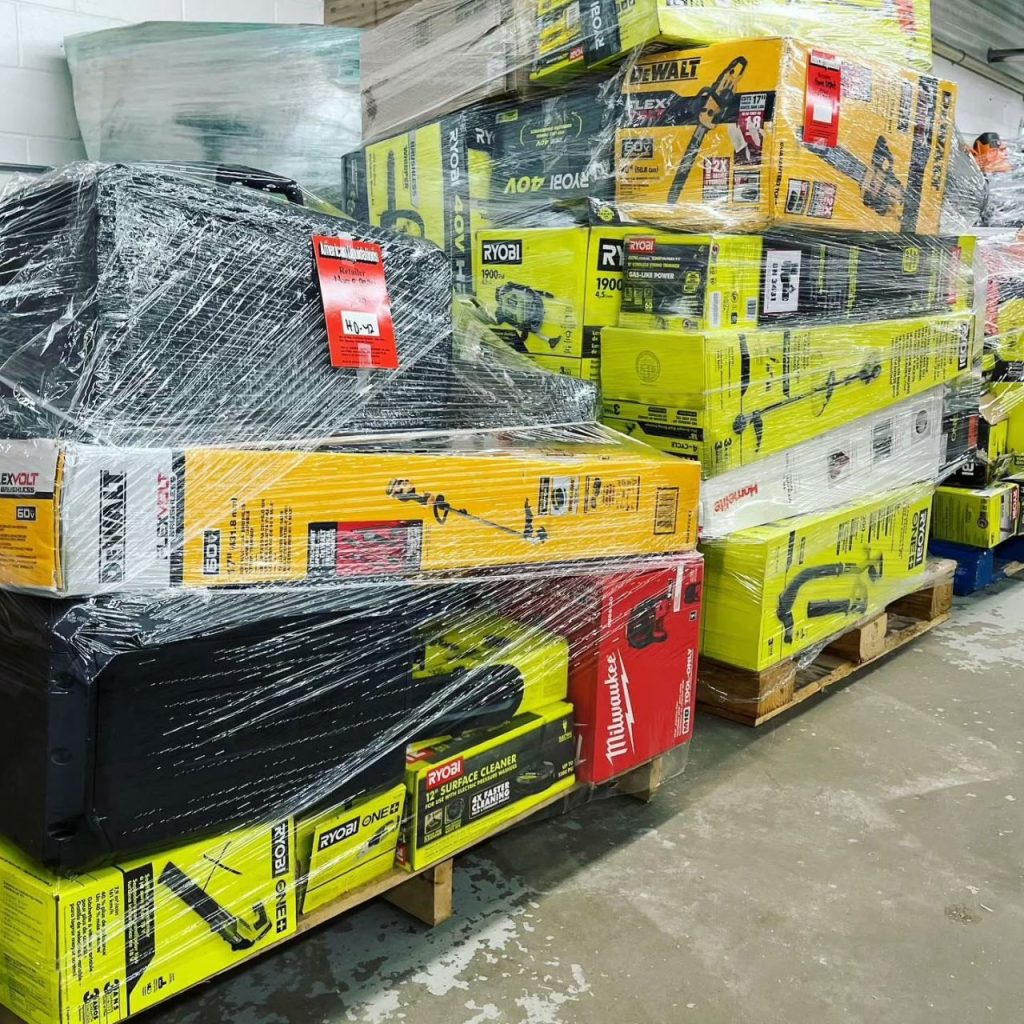
Pallets are shrink-wrapped and stacked for transport; we provide manifests and condition detail upon request.
Export customers: contact us in advance to quote delivery to port or direct international freight.



Key Takeaways
Massachusetts sales tax of 6.25 percent must be considered unless a resale certificate is provided.
Average prices for general merchandise pallets range between 300 dollars and 800 dollars.
Amazon and Target remain the most popular sources for high-demand return items in the region.
Boston-based buyers should prioritize local pickups to save on heavy freight costs.
Verification of the seller is the most important step before any money is exchanged.
Pallet Liquidation Massachusetts
Pallet Liquidation Massachusetts involves the bulk purchase of returned or overstock items from major retailers. This process is different from individual lot buying because it focuses on volume and variety. Entire pallets are sold as single units to resellers who then sort and sell the items for a profit.
Local regulations in Massachusetts play a big role in how these deals are handled. A sales tax of 6.25 percent is usually applied to purchases unless the buyer has a valid Massachusetts Department of Revenue resale certificate. Logistics are also shaped by the dense traffic patterns in the Boston area and the limited warehouse space.
Typical sources for these goods include big-box returns, shelf-pulls, and closeouts from regional distribution centers. High-quality items are often found in loads originating from the northeast corridor. These loads are frequently processed in local warehouses before they are made available to the public.
| Factor | Description | Impact on Buyer |
| Sales Tax | 6.25% standard rate | Increases initial cost without certificate |
| Pickup | Local warehouse docks | Saves 100 to 300 dollars in shipping |
| Sourcing | Regional distribution centers | Faster turnaround for local inventory |
| Regulations | State consumer laws | Provides some protection against fraud |
| Competition | High in urban centers | Requires quick decision-making |
What Is The Average Price Of A Liquidation Pallet?
The average price of a pallet depends heavily on the category of the items inside. In the New England market, general merchandise pallets are typically priced between 300 dollars and 900 dollars. Electronics pallets are more expensive and can range from 1,000 dollars to over 3,000 dollars depending on the brand names included.
Apparel pallets are often sold by the piece or by weight, but a full pallet might cost between 400 dollars and 1,200 dollars. Tools and hardware loads are highly sought after and usually command a price of 600 dollars to 1,500 dollars. These price bands reflect the higher cost of living and operations in the Massachusetts area.
Several factors will move these prices up or down. Manifest accuracy is a primary driver; a fully listed pallet costs more than an unmanifested “mystery” pallet. Seasonality also plays a role, as prices for toys rise before December. The grade of the items, such as A/B (like new) or C (heavily used or broken), is the final major price factor.
What Is A Good Price For A Pallet?
Yes, a good price is generally defined as 10 percent to 20 percent of the original retail value. This threshold is used by experienced buyers to ensure there is enough room for a profit margin. A target gross margin of 40 percent after all expenses is considered healthy for most resellers in this industry.
When judging a deal, you must compare manifested versus unmanifested pallets.
A manifested pallet allows for a precise calculation of the potential return on investment. Unmanifested deals are cheaper but they carry a much higher risk of containing low-value items. A price is only “good” if the cost-to-resale ratio allows for your time and labor to be covered.
How Much Do Amazon Return Pallets Cost?
Amazon return pallets typically cost between 400 dollars and 1,500 dollars in the Massachusetts region. The wide variance is driven by the specific category, such as “High-Value Electronics” versus “Small Consumables.” Condition mix is another factor, as “Small Sorts” often have higher resale rates than bulky furniture items.
Buyers often forget to include extra fees when calculating their total investment. A buyer’s premium of 10 percent to 15 percent is often charged by auction sites. Palletizing fees and local freight charges can add another 50 dollars to 200 dollars to the final bill. It is important to read the fine print before placing a bid on any Amazon liquidation platform.
| Fee Type | Average Amount | Frequency |
| Buyer’s Premium | 10% – 15% | Per Auction |
| Palletizing Fee | 25 – 50 dollars | Per Pallet |
| Massachusetts Sales Tax | 6.25% | Unless Exempt |
| Local Delivery | 75 – 200 dollars | Within 30 miles |
| Storage Fees | 10 – 20 dollars | Daily after 3 days |
Are Liquidation Pallets Worth The Risk?
Yes, liquidation pallets are worth the risk if you have a solid plan for processing the inventory. The potential for a high return on investment is significant for those who can test and repair items. However, capital is often tied up for weeks while the inventory is being sorted and listed for sale.
The workload involved in testing, cleaning, and listing items is often underestimated by beginners.
Experienced buyers use a refined process to move through inventory quickly, which reduces their overall risk. For a beginner, the outcome is often determined by their ability to handle the physical and operational demands of the business.
What Are The Risks Of Pallet Liquidation?
Strategic risks include category saturation and sudden policy changes on marketplaces like eBay or Facebook. If too many people are selling the same toaster, the price will drop rapidly. You must stay informed about marketplace trends to avoid holding dead inventory that cannot be moved.
Operational risks are also a major concern for local buyers.
Storage constraints in a home or small garage can quickly become a problem when multiple pallets arrive. Cash-flow squeeze occurs when money is spent on new inventory before the old stock has been sold. Reverse logistics, such as handling returns from your own customers, must also be managed carefully.
Where Can I Buy Legitimate Amazon Pallets?
Legitimate Amazon pallets are bought through authorized exchanges and vetted brokers. You can verify a seller by checking their business license and looking for physical warehouse locations. A legitimate seller will usually have a professional website and a clear process for handling disputes.
To buy from these sources, you must first set up an account and provide your business details.
Verification steps often include submitting a tax identification number and a resale certificate. These requirements are signs of a legitimate operation that follows state and federal laws. You can check the Better Business Bureau to see the reputation of a specific broker.
Does Amazon Have A Liquidation Store?
No, Amazon does not have a physical “liquidation store” for the public, but they do have an official online marketplace. This platform connects the retailer directly with bulk buyers through a bidding format. The inventory sold here consists of customer returns and overstock items that are no longer held in their fulfillment centers.
Enrollment in the official marketplace is required before you can place any bids. Bidders in Massachusetts can often find regional pickup options in nearby states like Connecticut or New Hampshire. This regional access helps to keep shipping costs lower for those living in the Boston area.
Where Can I Buy Target Return Pallets?
Target return pallets are found through recognized exchanges like B-Stock or through large-scale liquidation brokers. To qualify for these purchases, a registered business account is typically required. Target is known for having a very structured liquidation process compared to other retailers.
Target-specific grading is important to understand before you buy. “Shelf-pulls” are items that were never sold to a customer and are usually in excellent condition. “Customer returns” can vary wildly in quality and may include items that are missing parts. Common categories found in these loads include home decor, apparel, and seasonal items.
| Item Grade | Condition Level | Expected Resale Value |
| Shelf-Pulls | High (New) | 70% – 80% of MSRP |
| Grade A Returns | Moderate (Like New) | 50% – 60% of MSRP |
| Grade B Returns | Fair (Used) | 30% – 40% of MSRP |
| Salvage | Low (Broken/Parts) | 5% – 10% of MSRP |
| Mixed Loads | Variable | 20% – 50% of MSRP |
Top 10 Liquidation Stores To Visit In Boston, Massachusetts
Assessing local stores in the Boston area requires a visit to the physical location. You should look for stores that have clear sample inspection policies and dedicated test areas. Return rules should be clearly posted so you know your rights if a pallet is not as described.
Scheduling pickups in a busy city like Boston requires careful planning. You must ensure the location has proper loading access and parking for a box truck or a large trailer. Many stores in the urban core have restricted hours for heavy vehicle traffic. Always call ahead to confirm that your items are ready for loading.
Note: If you are looking for curated local options, you can book a sourcing call with experts to get deal alerts. This can save you hours of driving and help you find the best inventory for your specific niche.
Is Lucky 99 Center A Trusted Liquidation Store In Boston?
Doubtful, as trust must be earned through consistent purchases and verified feedback. When visiting Lucky 99 Center, you should verify the consistency of their pallets over several weeks. Always ask about their payment methods and look for reviews from other local resellers.
A trial purchase checklist is recommended before you scale your buying at any location. Start with a smaller lot or a single pallet to validate the quality of the merchandise. If the items match the description and the profit margin is there, you can consider larger investments.
Is Atlantic Liquidators A Reliable Option In Massachusetts?
Yes, Atlantic Liquidators is often cited as a reliable option due to its long history in the state. They are known for category specialization, which helps buyers who focus on specific items like furniture or tools. Transparency in grading is a strength that many local buyers appreciate.
You should try to negotiate hold policies if you are a frequent buyer at this location. Multi-pallet discounts are often available if you are willing to buy in higher volumes. Building a relationship with the warehouse manager can lead to better deals and early access to new shipments.
How Much Can I Resell Pallets For?
Reselling pallets for a profit requires a strategic pricing ladder across multiple channels. Local sales on Facebook Marketplace or at flea markets are great for heavy or low-value items. High-value electronics and brand-name goods are better suited for platforms like eBay or Whatnot.
Bundling strategies can be used to lift your average selling price. For example, kitting together a drill with a set of bits can make the offer more attractive to buyers. Creating multi-unit lots for small items helps to reduce shipping costs and increases the speed of your inventory turnover.
| Selling Channel | Target Item Type | Expected Margin |
| FB Marketplace | Furniture / Large Tools | 40% – 60% |
| eBay | Electronics / Designer Brand | 30% – 50% |
| Flea Markets | General Merchandise | 50% – 100% |
| Poshmark | Apparel / Shoes | 40% – 70% |
| Local Auctions | Bulk Lots / Salvage | 20% – 30% |
Which Pallets Pay The Most?
The highest-yielding categories for Massachusetts buyers are often tools, high-end kitchen appliances, and consumer electronics. These items have a high demand and a relatively small footprint, which keeps storage and shipping costs low. Seasonal items can also be very profitable if they are bought during the off-season and sold when demand peaks.
Seasonally advantaged loads, such as air conditioners in early spring or heaters in late fall, offer great opportunities. Timing your purchases is critical to maximizing your returns. According to data from the National Retail Federation, return rates spike significantly after the holiday season, making January a prime time for sourcing.
How To Liquidate With No Money?
Yes, it is possible to start liquidating with very little money by using consignment models. You can partner with local stores to sell their slow-moving inventory in exchange for a percentage of the sales. This allows you to gain experience and build capital without taking on the initial risk of buying a full pallet.
Revenue-share agreements with other local resellers can also provide a path forward. You might offer your labor for sorting and listing in exchange for a share of the profits. Tactics like pre-selling mystery boxes or organizing community group buys can help raise the funds needed for your first major purchase.
Frequently Asked Questions About Pallet Liquidation Massachusetts
What Should Beginners Know About Pallet Liquidation Massachusetts?
Beginners must know that this business requires physical space and a way to transport heavy goods. You should start small and focus on a category that you already understand well. Researching local tax requirements through the Small Business Administration is also a vital step for any new entrepreneur.
How Much Does The Average Liquidation Pallet Cost To Buy?
The average cost is between 400 dollars and 800 dollars for most general merchandise loads. This price does not include shipping or taxes, so you must budget for those additional costs. Prices will fluctuate based on the quality of the retailer and the current demand in the New England market.