
Pallet Liquidation Florida — Price And Risk Of Amazon Pallets
The secondary market for consumer goods is exploding in the Sunshine State. If you have ever wondered where returned items go after they leave a massive warehouse, the answer is often found in the world of Pallet Liquidation Florida. This industry allows individuals and small businesses to purchase bulk inventory at a fraction of the retail cost. However, the path to high profits is paved with specific risks and logistical hurdles that every buyer must understand before they invest their hard-earned money.
Whether you are looking for a side hustle on eBay or stocking a massive discount storefront, Florida provides a unique advantage. Due to its status as a major logistics hub, the state is flooded with overstock and customer returns. This guide will walk you through the costs, the legitimate sources, and the math required to ensure your first pallet purchase is a success rather than a costly lesson.
Table of Contents
Request a Bulk Quote
Ready to scale up? Submit your request below, and our team will respond within 24 hours with volume pricing, shipping options and available loads.
Shipping & Logistics
We’ve streamlined shipping to make bulk orders predictable and cost-efficient:
Orders typically ship within 2-4 business days once confirmed.
Full truck-load (FTL) and Less-than-truckload (LTL) carriers ready to service the U.S. mainland and select export routes.
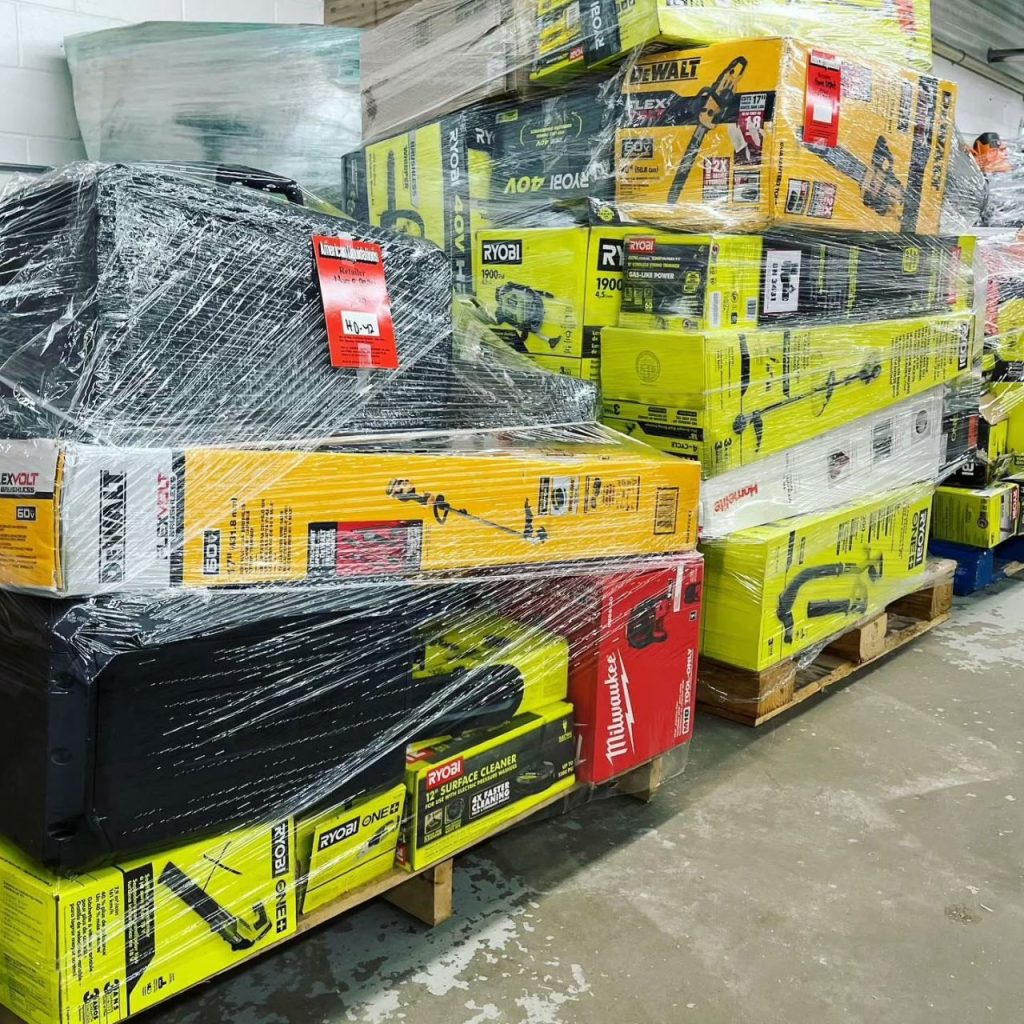
Pallets are shrink-wrapped and stacked for transport; we provide manifests and condition detail upon request.
Export customers: contact us in advance to quote delivery to port or direct international freight.



Key Takeaways
Florida is a Hub: The proximity to major ports and Amazon distribution centers makes Florida a prime location for low shipping costs on bulk pallets.
Pricing Varies: Expect to pay anywhere from $300 to $2,500 depending on the category and whether the items are manifested.
Risk is Real: Returns are sold as-is, meaning a percentage of the inventory will likely be broken or missing parts.
Verification Matters: Always check for a physical warehouse address and valid business licenses to avoid online liquidation scams.
Pallet Liquidation Florida
The landscape of Pallet Liquidation Florida is shaped by a constant stream of surplus and overstock goods. These items typically come from major retailers who need to clear shelf space for new seasonal inventory. When products are returned by customers or remain unsold, they are consolidated into large wooden crates and sold to the highest bidder. In Florida, this ecosystem is fed by international imports and domestic returns from massive fulfillment centers.
You will find that the market is divided into auctions, wholesalers, and local warehouses. Auctions are often conducted online where the highest bid wins the entire lot. Wholesalers might buy thousands of pallets at once and then break them down to sell individually to smaller resellers. Local warehouses in cities like Orlando or Tampa often allow for local pickup, which is a major benefit for those looking to save on heavy freight charges.
Different categories of goods attract different types of buyers.
Resellers often hunt for electronics or small appliances, while exporters look for bulk textiles and clothing to ship overseas. Flea market sellers usually prefer general merchandise pallets because they offer a variety of items at a lower price point per unit. Understanding these categories is essential for choosing the right inventory for your specific business model.
Logistics and paperwork are also part of the process in the state. Most legitimate liquidators will require you to provide a Florida Resale Certificate to avoid paying sales tax on your purchase. This certificate proves that you intend to resell the items to a final consumer. Additionally, you should be prepared for the physical demands of pickup, as most warehouses require a truck or a trailer for transport.
Jacksonville Liquidation Warehouse How To Prepare For A Visit
Before you head to a Jacksonville warehouse, the hours of operation must be confirmed. Many of these facilities are only open to the public on specific days or by appointment. It is also wise to ask about the inventory turn rate. A warehouse that moves inventory quickly is more likely to have fresh loads rather than picked-over leftovers that nobody else wanted.
When you arrive on-site, a thorough inspection of the pallets should be conducted. The physical condition of the boxes can tell you a lot about how the goods were handled. If the stack integrity is leaning or the bottom boxes are crushed, the items inside might be damaged. Look for original factory seals on the boxes, as these “shelf-pulls” are generally in better condition than “customer returns” that have been opened.
Where To Find Liquidation Pallets In Miami?
Miami is a massive gateway for liquidation due to its international trade routes. You can find options ranging from massive appointment-only yards to smaller local warehouses near the airport. Many of these locations cater to the export market, so you might find pallets specifically bundled for shipping to Central or South America.
Interactions with sellers in Miami are often multilingual, and being able to communicate in Spanish can be a benefit. Export-focused categories like apparel, shoes, and cosmetics are very common in this region. If you are a local buyer, ensure that the yard allows for individual pallet sales, as some Miami distributors only deal in full container loads for international shipping.
How To Save Money Buying Overstock Goods By The Truckload
The most significant savings are found when you move from buying single pallets to purchasing by the truckload. The cost-per-unit math is simple: when you buy in bulk, the middleman’s markup is removed. A full truckload typically contains 24 to 26 tall pallets, and the price per pallet drops significantly when you commit to this volume.
| Purchase Type | Average Pallet Count | Estimated Savings | Best For |
| Single Pallet | 1 | 0% (Base Price) | Beginners |
| LTL (Less Than Truckload) | 1 – 6 | 10% – 15% | Growing Resellers |
| Full Truckload | 24 – 26 | 25% – 40% | Large Retailers |
Freight consolidation is another way to save. If you are located on a common Florida shipping route, you might be able to find “backhaul” rates. This is when a trucking company offers a discount to fill an empty truck that is already returning to your area. Using services like uShip can help you compare these freight costs in real-time.
Where Can You Buy Pallets Of Merchandise In Florida?
Acquisition paths in Florida include local yards, regional auctions, and B2B marketplaces. Many buyers start by visiting local yards where they can see the merchandise in person. Regional auctions are also popular, though they require a bit more strategy to ensure you do not overbid in the heat of the moment.
Before you make a purchase, a due diligence checklist is required. You should verify the business licensing of the seller and read online reviews from other buyers. If a manifest is provided, it should be sampled to see if the retail values listed match current market prices on sites like eBay. It is often encouraged to initiate a quick quote request for nearby pickup options to lock in deals before they are gone.
What Is The Average Price Of A Liquidation Pallet?
The average price of a liquidation pallet typically ranges from $300 to $2,500. This wide range is explained by the type of merchandise and the condition of the items. A pallet of raw customer-returned clothing will be much cheaper than a manifested pallet of high-end power tools or small kitchen appliances.
| Category | Typical Price Range | Condition Type |
| General Merchandise | $300 – $800 | Mixed Returns |
| Apparel & Fashion | $400 – $1,200 | Overstock/Returns |
| Electronics | $800 – $2,500 | High Value/Tested |
| Tools & Hardware | $900 – $2,000 | Heavy Duty |
Several factors will move the price up or down. Seasonality plays a big role; for example, air conditioning units will be more expensive in the spring. Manifest clarity also impacts the cost. A “blind” pallet where you cannot see the contents is a gamble and should be priced lower. A fully manifested pallet, where every item is listed, commands a premium because the risk is lower.
What Is Considered A Good Price For A Liquidation Pallet?
A good price is determined by your target buy-box math. You must calculate your potential margin after accounting for shipping, marketplace fees, labor, and “shrink.” Shrink refers to the items that are completely unsellable or broken beyond repair. If a pallet costs $500 and has $1,500 in estimated resale value, you must decide if the $1,000 spread covers your time and expenses.
A “maximum bid” logic should be introduced based on the worst-case scenario. If 30% of the items are broken, is the pallet still profitable? If the answer is yes, then the price is likely a good deal. Professional buyers often aim to pay no more than 10% to 20% of the original retail value for unmanifested returns.
How Much Do Amazon Pallets Typically Cost?
Amazon pallets generally cost between $400 and $1,500. The cost is heavily influenced by whether the load consists of “Small Sorts” (electronics, books, jewelry) or “Medium/Large” items (vacuums, microwaves). Shelf pulls, which are items that never reached the customer, are always more expensive than raw customer returns.
In Florida, pricing might be slightly lower due to the density of Amazon Fulfillment Centers in the region. When pallets are shipped from out of state, the added freight can double the total investment. Local Florida yards often have more competitive pricing for those who can provide their own transportation.
Are Liquidation Pallets Worth The Risk?
Yes, they are worth the risk, but only for those with a disciplined strategy. The balance sheet of pros includes a very low cost of goods sold and the ability to acquire high volumes of inventory quickly. However, the cons involve unknown defects and the significant time required to test, clean, and list individual items for sale.
They pay off most effectively when you focus on a specific category. If you know how to repair electronics, a broken laptop pallet is a goldmine. If you have no technical skills, that same pallet is a total loss. Success in this industry requires having tested sales channels, such as a busy flea market booth or a high-rated online store, ready to move the inventory fast.
Is Amazon Pallet Liquidation Legit?
Yes, the supply chain for Amazon returns and overstock is entirely legitimate. Amazon works with large liquidation companies to move millions of items that cannot be put back on their virtual shelves. These items are processed through official channels and sold to secondary market buyers.
However, you must be aware of red flags for scams. If a seller demands payment only via wire transfer or cryptocurrency, it is likely a scam. Legitimate businesses will have a physical address you can verify on Google Maps and will typically accept credit cards or secure payment methods. Be wary of websites that only use stock photos instead of pictures of the actual warehouse.
Are Return Pallets Worth Buying?
Doubtful, unless you have a plan for processing damaged goods. Return rates in e-commerce can be as high as 30%, and many of those items are sent back because they are defective. You must expect a certain percentage of “dead on arrival” (DOA) items in every load.
Value recovery strategies are essential for making return pallets profitable. This includes “partsing out” items that cannot be fixed selling the screen of a broken tablet, for example. You might also partner with local refurbishers or create “bundle lots” of lower-value items to sell quickly. If you simply expect every item to be brand new, you will be disappointed.
What Are The Risks Of Buying Amazon Pallets?
The risks of buying Amazon pallets include receiving items that are missing essential parts, encountering counterfeit brands that were mixed into the inventory, and facing “liquidation fatigue.” This fatigue happens when a buyer spends all their capital on a pallet that takes months to sell, leaving them with no cash flow for new inventory.
| Risk Factor | Impact | Mitigation Strategy |
| Defective Goods | High | Factor 25% loss into your math |
| Missing Parts | Medium | Keep “parts bins” from old pallets |
| Scam Sellers | Very High | Only buy from verified FL warehouses |
| Market Saturation | Medium | Sell on multiple platforms (FB, eBay) |
You can mitigate these risks by researching seller reputation mapping. Look for sellers who allow for on-site inspection before the money changes hands. It is also helpful to perform SKU sampling if a manifest is available, checking the current “sold” prices on mobile apps while you are standing in the warehouse.
Where Can I Buy Amazon Pallet Returns?
You can buy Amazon returns through three primary routes: local Florida warehouses, regional auctions, and national B2B platforms. Local warehouses are often the best for beginners because they offer pickup convenience and no shipping fees. Regional auctions can offer lower prices but require you to be fast and decisive.
National B2B platforms like B-Stock often have specific “Florida Only” sections in their marketplaces. These sites provide a more professional buying experience with clear dispute policies and detailed manifests. While they may charge buyer’s fees, the transparency they provide often outweighs the extra cost for serious business owners.
Which Liquidation Site Offers The Best Buying Experience?
The best buying experience is usually offered by sites that prioritize manifest detail and have a clear dispute policy. When you are buying thousands of dollars worth of goods, you need to know what happens if the pallet you receive is not what was described. Look for platforms that offer buyer tools like “watch lists” and historical pricing data.
Transparency is the most important metric. A site should clearly state the condition of the goods—whether they are “Grade A” overstock or “Grade C” returns. Sites that have established Florida pickup nodes will save you the most money on logistics. You are encouraged to subscribe for instant alerts on Florida-arriving pallets to ensure you get first access to the best loads.
How To Purchase An Amazon Mystery Box?
Purchasing an Amazon mystery box is different from buying a manifested pallet because it is often done for entertainment or small-scale testing. These boxes are unmanifested and usually contain smaller items. The ROI (Return on Investment) is much harder to predict compared to a full pallet of known goods.
If you decide to buy a mystery box, cap your spending at an amount you can afford to lose. Always choose trusted sellers with high ratings and start with smaller test orders. While they can be fun to open, they are rarely the foundation of a sustainable long-term resale business.
Frequently Asked Questions About Pallet Liquidation Florida
How Does Pallet Liquidation Florida Help Resellers Find Inventory?
Pallet Liquidation Florida provides a local, high-volume source of goods that allows resellers to bypass traditional retail markups. By buying in bulk, resellers can find a wide variety of items to list on various platforms. The proximity to major Florida shipping ports also ensures that the inventory is constantly being refreshed with new types of merchandise.
What Is The Average Price Of A Liquidation Pallet In Florida?
The average price in Florida typically falls between $400 and $1,200 for general merchandise. Because Florida has so many distribution hubs, the local supply is high, which helps keep prices competitive compared to landlocked states. However, specialized pallets like high-end electronics or industrial tools will always command a higher price regardless of the location.